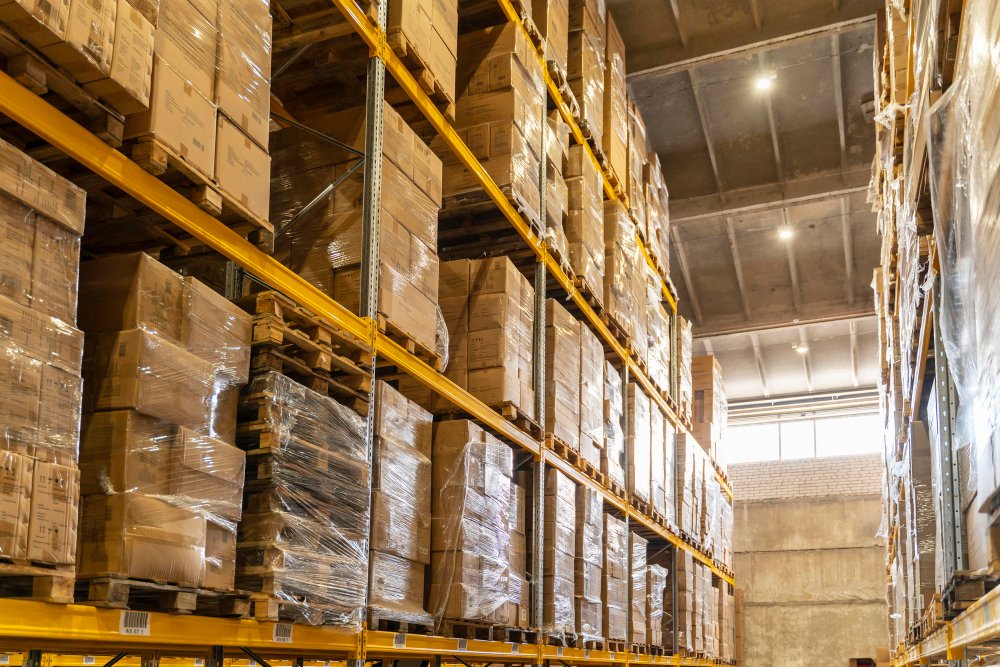
Discontinuing a product does not make the remaining inventory disappear. A manufacturer may replace an older model, a retailer may reset a category, or a distributor may stop carrying a brand. In every case, sellable units can remain in warehouses, fulfillment centers, and third-party logistics facilities after regular demand has slowed.
That leftover stock creates a practical business question: how can you sell discontinued inventory in bulk without confusing customers, weakening current pricing, or creating conflict with your normal sales partners?
The answer begins with preparation. A controlled liquidation is not simply a deep discount applied to every unit. It is a structured process that identifies what is available, separates inventory by condition, documents the lot accurately, and selects a resale path that fits the product and the seller’s commercial priorities.
This guide explains how to prepare discontinued products for a bulk sale, what information a buyer needs, which risks to consider, and how to compare an offer based on the complete transaction rather than price alone.
What Is Discontinued Inventory?
Discontinued inventory consists of products a business no longer plans to manufacture, replenish, distribute, or sell through its regular channels. The products may still be new, usable, and commercially valuable even though they have reached the end of their planned life cycle.
Common examples include:
- A previous model replaced by an updated version
- Seasonal packaging that is no longer current
- Products removed during a retail assortment reset
- Merchandise associated with a retired color, design, or collection
- Stock from a discontinued supplier relationship
- Items left after a private-label program ends
- Products that no longer fit a company’s core strategy
- Inventory with older branding or packaging
Discontinued does not automatically mean damaged, defective, expired, or obsolete. Some discontinued goods remain attractive to secondary-market customers because they are functional, recognizable, and available at a different price point. The challenge is presenting the inventory honestly and finding a buyer whose resale channels match the nature of the lot.
Why Discontinued Stock Becomes Expensive to Hold
Businesses sometimes delay liquidation because the units are already paid for and still appear as assets. However, the decision to hold inventory should be based on its likely future value and ongoing cost—not only its original purchase or production cost.
Discontinued products can create several types of pressure.
Warehouse space remains occupied
Pallet positions used by inactive products cannot support faster-moving items. The cost becomes more noticeable during a warehouse reconfiguration, peak season, new product launch, or facility move.
Working capital stays tied up
Unsold inventory represents cash that cannot be used elsewhere in the business. Recovering less than the original cost may still be more useful than waiting indefinitely for uncertain retail sales.
Product relevance may continue to decline
Some products hold their utility for years, while others lose demand when technology, packaging, consumer preferences, or compatible product lines change. Delaying a sale can narrow the available buyer pool.
Handling costs can accumulate
Internal transfers, recounts, relabeling, cycle counting, insurance, and repeated sales efforts all consume resources. Even when storage appears inexpensive, inactive inventory can create operational work.
Condition can deteriorate
Packaging can fade, cartons can crush, labels can peel, and products can be exposed to unsuitable temperatures or humidity. A clean, saleable lot may become harder to market if it remains stored for too long.
The best time to review discontinued inventory is therefore not after it becomes a disposal problem. It is when the business first knows that regular replenishment or promotion will end.
The Main Risk: Uncontrolled Resale
The largest offer is not automatically the best liquidation outcome. Sellers should also consider where the products may reappear and how that resale activity could affect current operations.
A discontinued item offered broadly online at a steep discount may compete with the seller’s remaining retail inventory. It may also confuse customers if a newer version is being launched. Distributors or retailers could object if secondary-market products enter territories or channels that overlap with existing agreements.
These concerns do not mean discontinued products cannot be liquidated. They mean the sale should be planned around clear priorities. Before approaching a buyer, decide which considerations matter most:
- Is domestic online resale acceptable?
- Are major marketplaces permitted or restricted?
- Can products be exported, donated, or sold through discount stores?
- Must identifying labels, warranty cards, or promotional inserts be removed?
- Are there territorial, licensing, distribution, or contractual limits?
- Is the product subject to expiration, safety, recall, or regulatory requirements?
- Does the seller require proof of destruction for units that cannot be resold?
These questions should be reviewed internally with the appropriate legal, compliance, brand, and sales teams. A liquidation buyer can follow agreed transaction terms, but the seller remains responsible for identifying restrictions that apply to its products.
Step 1: Define the Objective of the Liquidation
Before requesting offers, identify why the inventory needs to move. A clear objective makes it easier to compare options.
The priority may be to:
- Clear a facility before a fixed date
- Recover working capital
- Make room for a new product line
- Exit a category or supplier relationship
- Consolidate multiple warehouses
- Reduce ongoing storage and handling costs
- Keep discounted products away from a primary channel
The objective affects the structure of the deal. A seller facing a warehouse deadline may value a buyer who can take the full lot and coordinate pickup. A brand focused on channel control may accept a more limited resale arrangement. A company seeking maximum recovery may segment the strongest SKUs and allow more time for multiple transactions.
There is no single correct approach for every lot. The right approach is the one that supports the seller’s most important operational and commercial goals.
Step 2: Audit Every SKU and Location
Do not market discontinued inventory from a rough estimate. Conduct a physical or system-supported audit that confirms what is actually available.
For each SKU, record:
- Product name and description
- SKU, UPC, EAN, or GTIN
- Quantity available
- Units per case
- Cases per pallet
- Condition
- Packaging type
- Original wholesale or retail price, if useful
- Current location
- Lot, batch, serial, or date information when applicable
- Dimensions and weight
- Known restrictions or special handling needs
GS1 explains that a Global Trade Item Number can uniquely identify trade items. Including a valid product identifier helps a buyer match the manifest to the correct item and reduces confusion between similar versions. Review the official GS1 guidance on GTINs when verifying product data.
If the inventory is stored in more than one building, show the quantity at each location. A buyer needs this information to estimate pickup, labor, and freight accurately.
Step 3: Separate Inventory by Condition
Mixed-condition lots create uncertainty. A buyer cannot value a pallet of factory-sealed merchandise the same way as a pallet containing shelf pulls, open boxes, and customer returns.
Use simple, consistent categories such as:
- New and factory sealed
- New with damaged packaging
- Retail shelf pulls
- Open-box items
- Customer returns
- Used or tested goods
- Incomplete products
- Damaged or nonfunctional units
Avoid descriptions such as “mostly new” unless you can provide an approximate breakdown and explain how it was determined. If condition varies by pallet or SKU, reflect that variation in the manifest.
Honest grading does not weaken a legitimate offer. It gives the buyer enough confidence to price the lot and reduces the possibility of a dispute after pickup.
Step 4: Identify Product-Life and Compliance Issues
Some discontinued inventory requires more than a quantity count. Buyers may need dates, documentation, or special disclosures before they can consider the stock.
Pay particular attention to:
- Expiration and best-by dates
- Lot or batch codes
- Recall status
- Warranty coverage
- Safety certifications
- Country-specific labels
- Software or service dependencies
- Missing accessories
- Product registration requirements
- Hazmat or restricted-shipping classifications
Never mix recalled or unsafe products into a general liquidation lot. If an item requires controlled disposal, recycling, or another regulated process, follow the applicable manufacturer and government guidance.
For electronics and connected devices, confirm whether discontinued products still receive necessary software support. For health, beauty, food, supplements, and other date-sensitive categories, provide clear photographs of the date codes and state whether the date is an expiration, manufacture, or best-by date.
Step 5: Build a Buyer-Friendly Inventory Manifest
The manifest is the foundation of a bulk inventory transaction. It should let a buyer understand the lot without reconstructing the offer from emails and scattered attachments.
Use one row per SKU and one column for each important attribute. Keep descriptions consistent. If the same SKU exists in two conditions or locations, use separate rows so the difference is visible.
A useful manifest normally includes:
- SKU or item number
- UPC, EAN, or GTIN
- Brand
- Product description
- Quantity
- Case pack
- Condition
- Unit cost, wholesale price, or MSRP when available
- Date code when relevant
- Warehouse location
- Notes about restrictions or defects
Remove duplicate lines and check formulas before sending the file. Quantities in the manifest should match the total stated in your email or submission form. If the count is estimated, label it as estimated and explain when a final count will be available.
Step 6: Take Photographs That Show the Real Lot
Catalog images can help identify a product, but they do not prove the condition of the inventory being sold. A buyer also needs current photographs from the warehouse.
Include:
- A clear front image of representative products
- Close-ups of labels and model numbers
- UPC or GTIN photographs
- Date or lot codes where relevant
- Inner and outer packaging
- Any visible damage
- Full pallets or storage areas
- Pallet labels and case markings
Do not hide damaged cartons behind cleaner units. Representative photographs help a buyer understand the ratio of clean to imperfect merchandise and can reduce the need for repeated questions.
If the lot is large, photograph several pallets from different areas rather than relying on one carefully selected sample.
Step 7: Establish Acceptable Resale Channels
Once the inventory is documented, decide where it may be resold. The goal is to make the boundaries practical and clear.
Possible channels include:
- Independent discount retailers
- Closeout stores
- Wholesalers
- Export markets
- Business-to-business resale
- Off-price retail
- Secondary ecommerce channels
- Donation or approved nonprofit distribution
- Parts harvesting or recycling for unsuitable goods
Restrictions should be discussed before the transaction, not after the buyer has taken possession. If particular marketplaces, countries, accounts, or customer groups are prohibited, state those requirements in writing and confirm that they are commercially workable.
Avoid vague instructions such as “protect the brand.” Different parties may interpret that phrase differently. Specific channel boundaries, product-handling requirements, and documentation expectations are easier to evaluate and follow.
Step 8: Decide Whether to Sell the Lot Together or Segment It
A single-lot sale is often the simplest option. One buyer, one agreement, and one pickup can reduce administrative and operational work. However, some discontinued inventory may benefit from limited segmentation.
Consider separating:
- New merchandise from returns
- Current packaging from older packaging
- High-demand SKUs from very slow-moving items
- Domestic-ready products from export-ready products
- Complete products from incomplete or damaged units
- Date-sensitive inventory from products without shelf-life concerns
Segmentation can improve clarity and may broaden the buyer pool. Too much segmentation, however, can leave the business with undesirable remnants. If the main objective is a complete warehouse exit, specify that preference and evaluate whether a buyer will purchase the entire lot.
Step 9: Approach a Direct Bulk Inventory Buyer
When your manifest, images, and restrictions are ready, contact a buyer that evaluates commercial quantities of surplus and discontinued products. Start with a concise summary:
- What the products are
- Total unit and pallet count
- General condition
- Location
- Desired pickup timeline
- Whether the entire lot must be purchased
- Any important resale restrictions
You can learn more about Bulk Inventory Buyer before submitting a lot. When the information is complete, use the inventory submission page to provide the details needed for an initial review.
A buyer may request additional information or samples for certain categories. Responding with organized records helps keep the evaluation moving and demonstrates that the inventory has been represented carefully.
Step 10: Compare the Complete Offer
An offer should be evaluated in the context of the full transaction. The headline purchase price matters, but so do the costs, timing, risk, and work required to complete the sale.
Review:
- Total purchase amount
- Products and quantities included
- Payment method and timing
- Freight responsibility
- Loading and pickup requirements
- Inspection or verification terms
- Handling of count differences
- Resale-channel terms
- Required removal date
- Treatment of damaged or rejected units
- Documentation provided after completion
Calculate the expected net recovery after freight, commissions, labor, storage, platform fees, and any other transaction costs. A direct bulk sale that removes the entire lot may produce a better operational result than a higher theoretical return earned slowly through individual sales.
The comparison should also reflect certainty. An offer is only valuable if the buyer can meet the agreed payment and pickup terms.
Step 11: Prepare the Warehouse for Pickup
Once an agreement is in place, organize the shipment so the count and condition can be verified efficiently.
Before pickup:
- Label each pallet
- Match pallet labels to the manifest
- Separate excluded inventory
- Confirm pallet dimensions and weights
- Secure cases for transit
- Photograph the prepared load
- Confirm dock hours and appointment rules
- Provide loading equipment details
- Identify a warehouse contact
- Retain signed shipping and transaction records
If quantities change before pickup, tell the buyer promptly and provide an updated manifest. Clear communication protects both parties and prevents delays at the dock.
When Should a Business Liquidate Discontinued Products?
The most effective liquidation decisions are usually made according to predefined triggers rather than emotion. Consider reviewing a discontinued lot when:
- Normal sales have fallen below an acceptable rate
- The next model or collection has launched
- Storage costs exceed expected additional recovery
- A lease, warehouse move, or facility closure creates a deadline
- Packaging or product relevance may decline further
- The inventory is distracting the team from core products
- A complete lot is available in clean, identifiable condition
Waiting can make sense when demand is predictable and holding costs are low. It is less attractive when condition, relevance, or marketability is declining. Set a review date and make the decision using current sales velocity, carrying cost, and operational priorities.
Common Mistakes to Avoid
Anchoring to the original cost
Original cost is useful for accounting, but a secondary-market buyer evaluates present demand, condition, logistics, and resale risk. Treating historical cost as the only measure of value can delay a necessary decision.
Providing incomplete quantities
An estimate with no SKU detail forces a buyer to assume risk. A reliable count and clean manifest make the opportunity easier to evaluate.
Mixing unsellable goods into the lot
Do not combine recalled, expired, broken, or prohibited items with sellable inventory without disclosure. Separate them and follow the appropriate disposition process.
Waiting until the final warehouse deadline
Urgency reduces flexibility. Begin the process early enough to answer questions, evaluate offers, prepare pallets, and schedule freight.
Ignoring channel consequences
Selling without discussing resale boundaries can create price and relationship problems later. Decide acceptable channels before closing the transaction.
Comparing gross prices instead of net outcomes
A piecemeal approach may appear to offer more revenue but can require months of storage, labor, fees, returns, and customer service. Compare the total economics and workload.
Can Liquidation Support Sustainability Goals?
Selling usable discontinued inventory can extend the life of products that might otherwise remain idle or become waste. It is not automatically the correct path for every item—unsafe, recalled, or unsuitable products require proper handling—but resale can be part of a broader materials-management strategy.
The U.S. Environmental Protection Agency’s Sustainable Materials Management framework encourages a life-cycle view of materials. For businesses, that means considering how products can remain in productive use where appropriate rather than treating disposal as the first option.
Keep sustainability claims specific and supportable. Record what was sold, donated, recycled, or destroyed instead of making broad environmental statements that cannot be verified.
Turn Discontinued Stock Into an Organized Exit
Discontinued inventory does not need to become a permanent warehouse fixture. With an accurate audit, clear condition grading, a complete manifest, representative photographs, and practical resale boundaries, a business can present the lot professionally and evaluate realistic options.
The key is to plan the exit while the inventory is still identifiable and marketable. Define your objective, disclose relevant product details, compare the complete economics of each offer, and choose a transaction that fits your timeline and channel priorities.
If your business has discontinued, overstock, closeout, or other surplus merchandise available in commercial quantities, submit your inventory for review. Include the manifest, product photographs, location, condition, and preferred timeline so the lot can be evaluated efficiently.
Frequently Asked Questions
What information do discontinued inventory buyers need?
Most buyers need a SKU-level manifest, quantities, condition, product identifiers, warehouse location, photographs, packaging details, and any applicable dates or resale restrictions. Complete information helps the buyer assess demand, freight, and handling requirements.
Can I sell discontinued inventory that is still new?
Yes. Discontinued products may be new and factory sealed. State the condition accurately and explain why the line was discontinued, especially if a newer model or packaging version has replaced it.
Should I remove my brand before selling closeout inventory?
That depends on the product, the sale terms, and your brand requirements. Relabeling, de-branding, or removing inserts can add labor and may not be appropriate for every product. Discuss specific requirements with internal legal or brand teams and the prospective buyer before agreeing to a sale.
How is discontinued inventory valued?
Value depends on current demand, quantity, condition, product age, documentation, resale restrictions, freight, and the buyer’s available channels. Original cost or MSRP alone does not determine a liquidation offer.
Can different discontinued SKUs be sold in one lot?
Often, yes. A mixed-SKU lot can be considered when each item is clearly listed and quantities are reliable. Separate condition categories and identify products with date, compliance, or handling concerns.
Is it better to sell the entire lot to one buyer?
A full-lot sale can reduce time, storage, and administrative work. Segmenting the lot may help when there are major differences in condition, demand, or resale restrictions. Choose the structure that best supports your primary objective.
How quickly can discontinued stock be sold?
Timing varies by category, quantity, condition, location, documentation, and freight needs. A complete manifest, current photographs, realistic expectations, and a clearly defined pickup window can help prevent avoidable delays.